
Why Trees Y

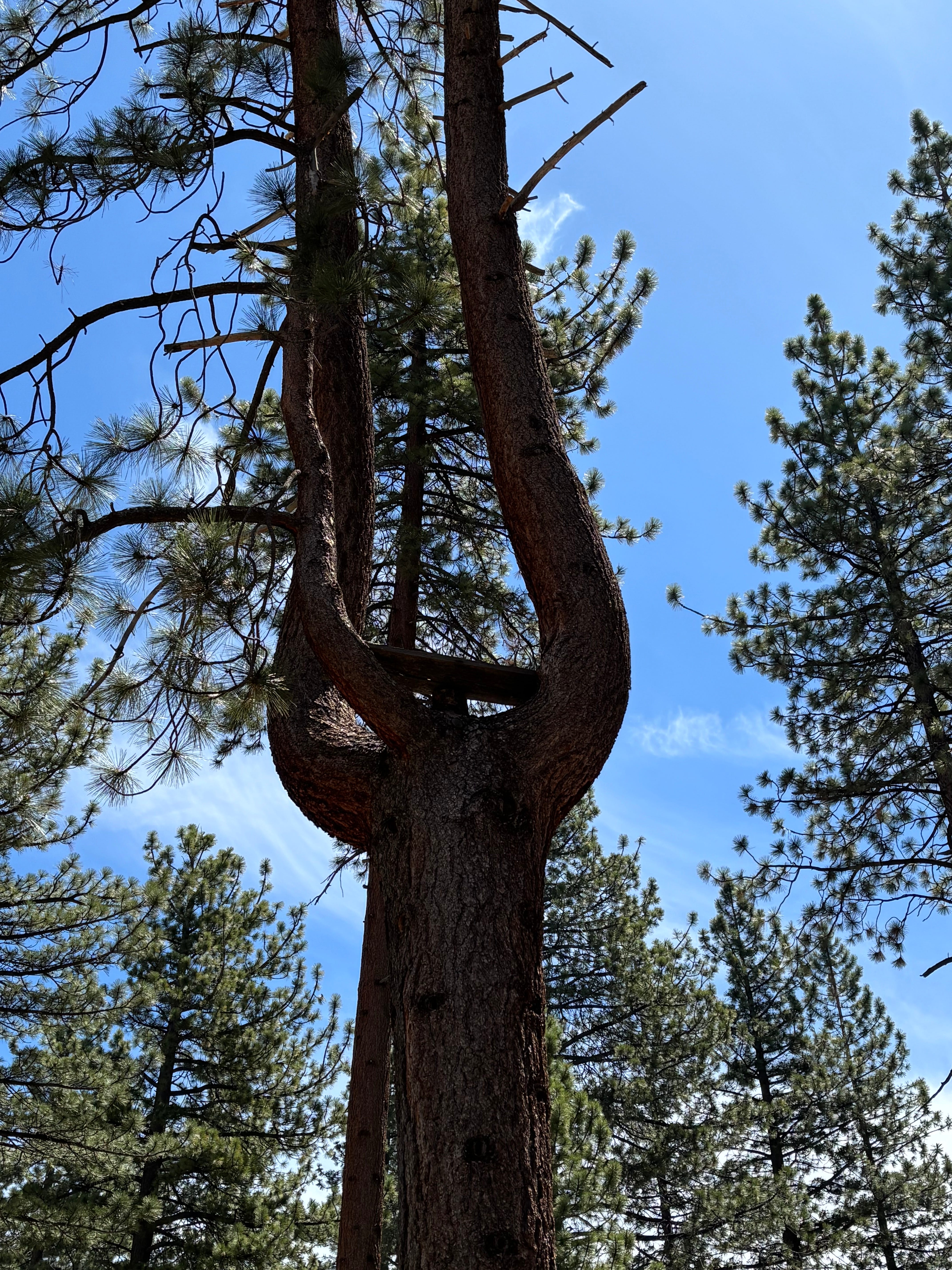
I have no idea how many trees I see on my daily walk, but it’s safe to say I could reach out and touch hundreds. Beyond them are thousands more, millions across the Tahoe Basin. Many stand closer together than they once would have because decades of fire suppression and regrowth after logging have allowed young trees to fill in the gaps. Some forests have become crowded, while others—like the one near my home—still open into meadows and boulder fields, where trees have room to grow into unique living sculptures.
On my walk I see many old trees, some of which seem to have two trunks, called “leaders.” Trees grow a second leader when the first is damaged. I don’t know what happened in these trees’ past, but because so many double-leaders cluster around Zephyr Shoals, the cause was likely shared—a heavy snow year, an insect infestation, or excessive snacking by resident deer.
Each tree has recorded its own injury. Read alone, their Y-shaped trunks are mysteries; read together, they become a chapter of collective history written in bark.
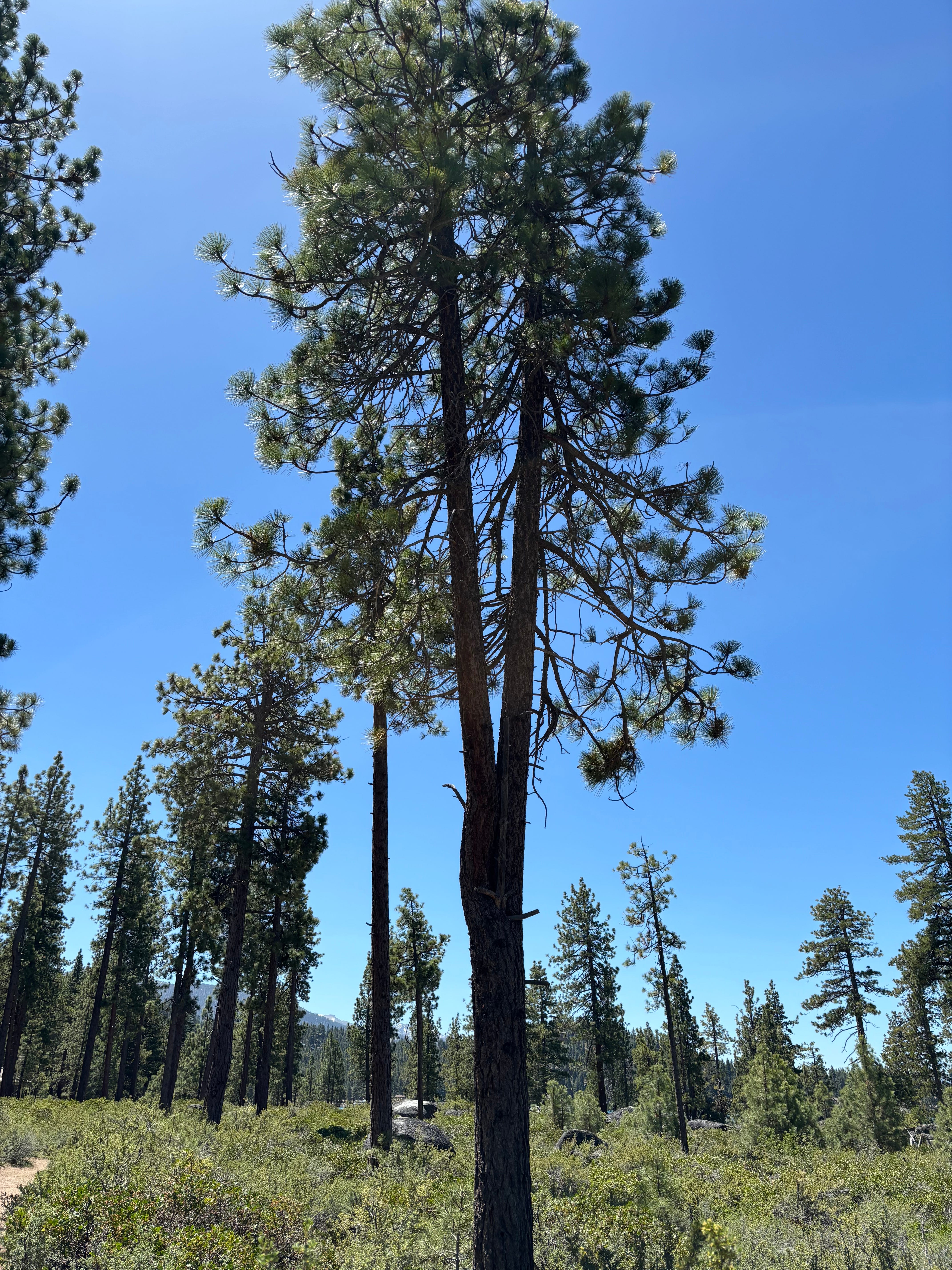
Sometimes you can only guess and marvel at their stories. Your first picture is a Lodgepole Pine, so named for its straight trunk, suitable for, well, lodge poles... the Latin name is Pinus contorta, referring to its habit of becoming twisted and bent in adverse conditions. It is the only plant I know with two accurate and contradictory names. Multiple trunks arise from trauma, whether lightning or a hungry critter, or wind and weather...
At UC Berkeley's forestry camp 50 years ago, we were taught that porcupines can cause pine trees to fork by chewing off the terminal leader. Once the top shoot is gone, the side branches all decide they're management material and start competing for the corner office.
We just held our 50th reunion at Meadow Valley near Quincy. Looking around at many of my campmates, I can only conclude that the porcupines didn't stop with the pine trees—they apparently developed a taste for long hair as well.